14 Sep Tooth Hurts When I Chew: 6 Causes and What to Do Next
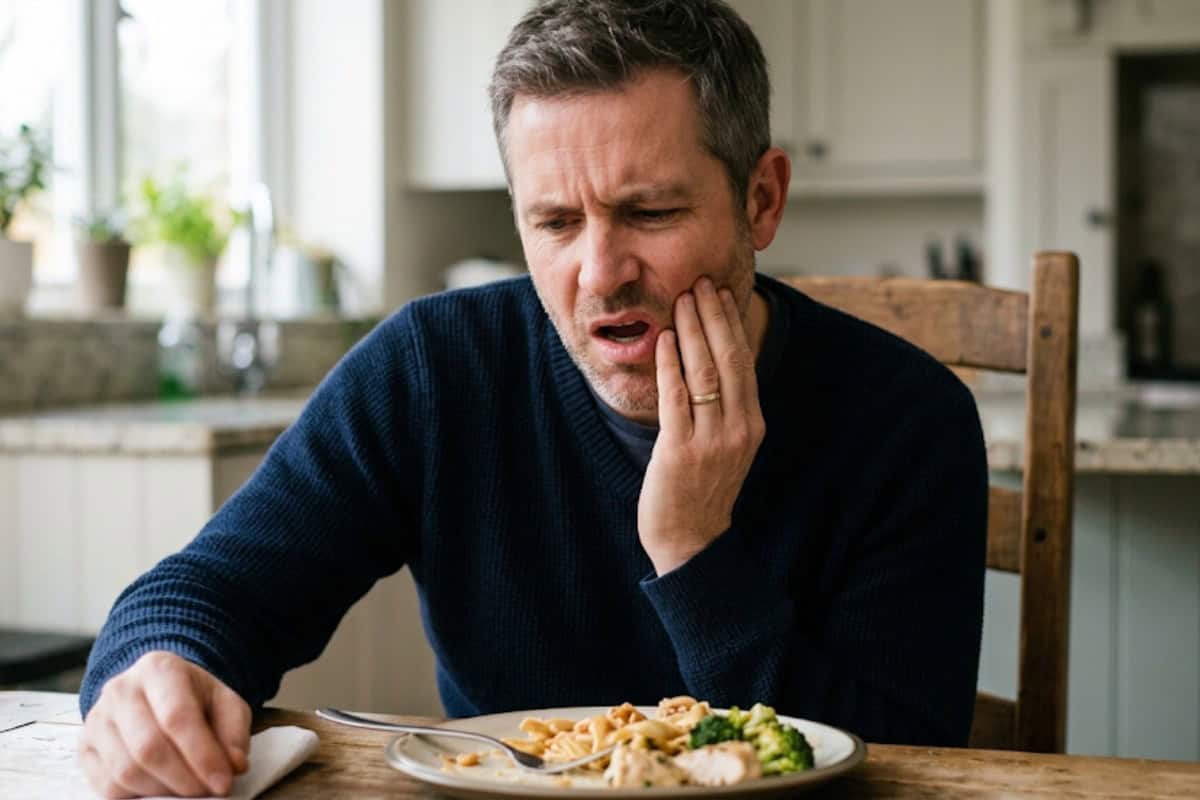
You bite into a slice of pizza on your lunch break in South Tulsa, and a sharp jolt shoots through one lower back tooth the instant you let go of the bite. At dinner the same thing happens with a bagel, then with a piece of grilled chicken. Nothing hurts while you are sitting still, so it is easy to chew on the other side and put it off another week. That pattern, where a tooth hurts when I chew but feels normal the rest of the day, is one of the most common reasons people call a dentist in Tulsa, Oklahoma, and it usually points to a short list of very specific problems.
When a Tooth Hurts When I Chew, Pressure Is the Clue
Chewing puts real force on a tooth, and that force finds weak spots that a resting tooth can hide. A crack flexes. A patch of decay presses on the nerve. An infected root gets squeezed. Because the pain shows up only under load, it can feel minor, but the cause underneath is often something that gets worse and more expensive the longer it waits.
The useful part is that different causes hurt in different ways. Sharp pain on release of the bite is not the same signal as a dull ache across several upper teeth, and a dentist uses those differences to narrow things down fast. Paying attention to your own pattern before your visit gives you a real head start on getting the right toothache treatment.
Six Causes of Pain When You Chew
A cracked tooth is the classic culprit. The American Association of Endodontists notes that erratic pain when chewing, especially with the release of biting pressure, is a hallmark of a cracked tooth, because the fractured segments shift and irritate the pulp inside. Treatment depends on how far the crack runs: cracks that reach the pulp are often treated with a root canal and a crown, while a crack extending below the gumline generally cannot be saved and the tooth is extracted.
A dental abscess feels different. Instead of a jolt only when you bite, you get constant, severe throbbing pain, often with facial or gum swelling, redness, a bad taste, or fever. The ADA describes an abscessed tooth as an infection caused by decay, periodontal disease, or a cracked tooth, and treatment may involve antibiotics, drainage, a deep cleaning between tooth and gum, or root canal treatment.
A high filling is the simplest problem on this list. If a new filling starts hurting specifically when you bite down, once the anesthesia wears off, and your bite feels off, WebMD’s guide to filling problems explains that the filling may be interfering with your bite and needs to be reshaped by your dentist. That is a short follow-up visit, not a major procedure.
Sinus pressure produces a dull ache across multiple upper back teeth at once rather than one sore spot. Mayo Clinic points out that the largest sinuses sit above the back teeth of the upper jaw and that the roots of the upper teeth are very near, or may even extend into, the sinus cavity, which is exactly why congestion can read as a toothache. The recommended path for a sinus toothache is to see a dentist first to rule out a dental cause, then a physician if none is found.
A cavity tends to bring sharp, stabbing pain along with sensitivity to sweets, hot, or cold, and sometimes visible white, brown, or black staining. Treatment is a filling, or a root canal and crown if the decay has advanced toward the pulp.
A failing filling is the quiet one. Constant pressure from chewing, grinding, or clenching can wear fillings away, chip them, or crack them, and when the seal between enamel and filling breaks down, bacteria work their way underneath. The fix is replacing the filling to reseal the tooth before new decay takes hold.
| Cause | Distinguishing sign | Typical treatment |
|---|---|---|
| Cracked tooth | Sharp, erratic pain with the release of biting pressure | Root canal and crown for cracks reaching the pulp; extraction if the crack extends below the gumline |
| Dental abscess | Constant, severe throbbing pain with swelling, redness, bad taste, or fever | Antibiotics, drainage, deep cleaning between tooth and gum, or root canal treatment |
| High filling | Pain on biting down right after a new filling; the bite feels off | Reshaping the filling at a short follow-up visit |
| Sinus pressure | Dull ache across multiple upper back teeth at once, often with congestion | Dental causes ruled out first, then a physician for the sinus side |
| Cavity | Sharp, stabbing pain with sensitivity to sweets, hot, or cold; white, brown, or black staining | A filling, or a root canal and crown if decay has advanced toward the pulp |
| Failing filling | An older filling worn, chipped, or cracked by chewing, grinding, or clenching | Replacing the filling to reseal the tooth before new decay develops |
What the Pain Pattern Tells You
Cleveland Clinic’s rundown of toothache causes offers a simple diagnostic cue worth remembering: a sharp, stabbing pain may mean a cavity or a crack, while severe, throbbing pain can mean infection has invaded the tooth pulp. That one distinction separates a problem you can schedule around from one that needs attention now.
Timing matters just as much. Pain that started the week you got a new filling points at the bite. Pain that started after you crunched an ice cube or a popcorn kernel points at a crack. Pain that arrived with a head cold and covers several upper teeth points at your sinuses.
So does location. One tooth that you can put a fingertip on behaves very differently from a vague ache you cannot pin down, and cracked teeth are famous for being hard to localize even for the dentist. Writing down what you notice over a day or two gives your appointment a much sharper starting point.
What to Do Before Your Appointment
A few things help while you wait, and none of them replace a diagnosis:
- Chew on the opposite side and stick to softer foods so you stop loading the sore tooth.
- Avoid very hot, very cold, and sugary foods if the tooth is sensitive to them.
- Keep the area clean with gentle brushing and flossing, since trapped food can make things worse.
- Try over-the-counter pain relief as directed on the label, and note whether it helps.
If the pain keeps coming back over more than a day or two, stop managing it and schedule an exam. Chewing pain almost never resolves on its own, because the crack, the decay, or the infection causing it does not heal on its own either.
When Chewing Pain Is an Emergency
Some symptoms mean you should be seen right away rather than next week. Cleveland Clinic advises calling a dentist promptly for a toothache that fits these descriptions, and federal health guidance flags spreading infection the same way:
- A toothache lasting longer than two days.
- Swelling in your face or jaw.
- Pain when you open your mouth wide.
- Facial swelling with a fever, which can signal a spreading infection.
How a Dentist Diagnoses It
The exam starts with your story: sharp or throbbing, on bite or on release, one tooth or several. From there, bite testing narrows it down. Biting on a small instrument, one cusp at a time, reproduces the pain on the specific tooth and the specific spot that is flexing, which is often the only way to find a crack that does not show up any other way.
Digital X-rays fill in what the eye cannot see, including decay under a filling, bone changes, and the pocket of pus that marks an abscess. If the exam and the images turn up no dental cause and the ache spans several upper teeth, that is the point to look at the sinuses instead. Getting this order right is what keeps you from having a healthy tooth treated for someone else’s problem.
Why Choose Magnolia Family Dental Care
Pain on chewing can come from six different causes, and the hardest one to catch, a cracked tooth, is the one that hides best on an X-ray and is difficult to pinpoint even for a dentist. That is why Dr. Melissa Jackson, DDS, treats this complaint as a diagnostic problem first. Magnolia Family Dental Care offers same-day appointments for toothaches and dental emergencies, and walk-in emergency visits can usually be accommodated, so you are not chewing on one side for two weeks waiting for an opening. Digital X-rays are taken on site, and bite testing during the exam localizes pain that imaging alone will miss. The treatment plan then matches the actual cause, whether that means reshaping a high filling, replacing a failing one, or restoring a cracked tooth, rather than a single default answer. The office is at 6939 S 66th E Ave in South Tulsa, serving patients across Tulsa, Oklahoma and nearby Broken Arrow, Bixby, Jenks, Owasso, Sand Springs, and Catoosa, with Spanish spoken and sedation dentistry available for anxious patients.
Conclusion
A tooth that hurts only when you chew is telling you something specific. Sharp pain on release suggests a crack, constant throbbing suggests infection, a bite that feels off after a new filling suggests a simple adjustment, and a dull ache across several upper teeth may not be your teeth at all. None of those sort themselves out with time, and the early versions are far easier to treat than the late ones. If chewing has become something you plan around, call Magnolia Family Dental Care in South Tulsa or reach out through the contact page to get an exam on the calendar.
Get Your Chewing Pain Diagnosed This Week. Call Magnolia Family Dental Care or schedule online to have that tooth looked at. Same-day toothache appointments are available, and the office files and tracks insurance claims electronically.
Frequently Asked Questions About Tooth Pain When Chewing
Why does my tooth hurt when I chew but not otherwise?
Chewing loads the tooth with force that resting does not, so weak spots only announce themselves under pressure. A crack flexes, decay presses toward the nerve, or an infected root gets compressed.
My tooth hurts when I bite down but there is no cavity. What could it be?
A cracked tooth is the most common answer, especially if the sharp pain hits when you release the bite rather than when you press down. Other possibilities include a high or failing filling, gum recession that exposes root surfaces, an abscess at the root, or sinus pressure affecting upper teeth. A bite test and X-rays help sort these apart.
Can a sinus infection cause tooth pain?
Yes. The largest sinuses sit directly above the upper back teeth, and those roots sit very near or even extend into the sinus cavity, so inflammation can feel like a toothache. See a dentist first to rule out a dental cause.
Why does my tooth hurt when I bite down after getting a filling?
The filling may be sitting slightly high and interfering with your bite, which you notice once the anesthesia wears off. The fix is having the dentist reshape the filling so the bite lands evenly. This is a quick adjustment rather than redoing the restoration.
How long should a tooth hurt after a filling before it is not normal?
Mild sensitivity for a few days is common. Pain specifically when biting down, a bite that still feels off, or discomfort that lasts beyond a couple of weeks is a reason to call.
Sorry, the comment form is closed at this time.