

21 Sep Does Getting a Crown Hurt? What You Actually Feel at Every Step
The most common misconception about crown appointments is that you lie there feeling your tooth get filed down, when the reality is that the tooth and the gums around it are fully numb before any reshaping begins. That single step, local anesthetic given before the drill ever touches enamel, is the reason most patients say the appointment felt like pressure rather than pain. So when people ask does getting a crown hurt, the honest answer is that the appointment itself usually does not, and the discomfort that does show up tends to arrive later, in a predictable two-week window after the permanent crown goes on. Knowing which sensations belong on that timeline makes the whole process far less stressful.
Does Getting a Crown Hurt During the Appointment?
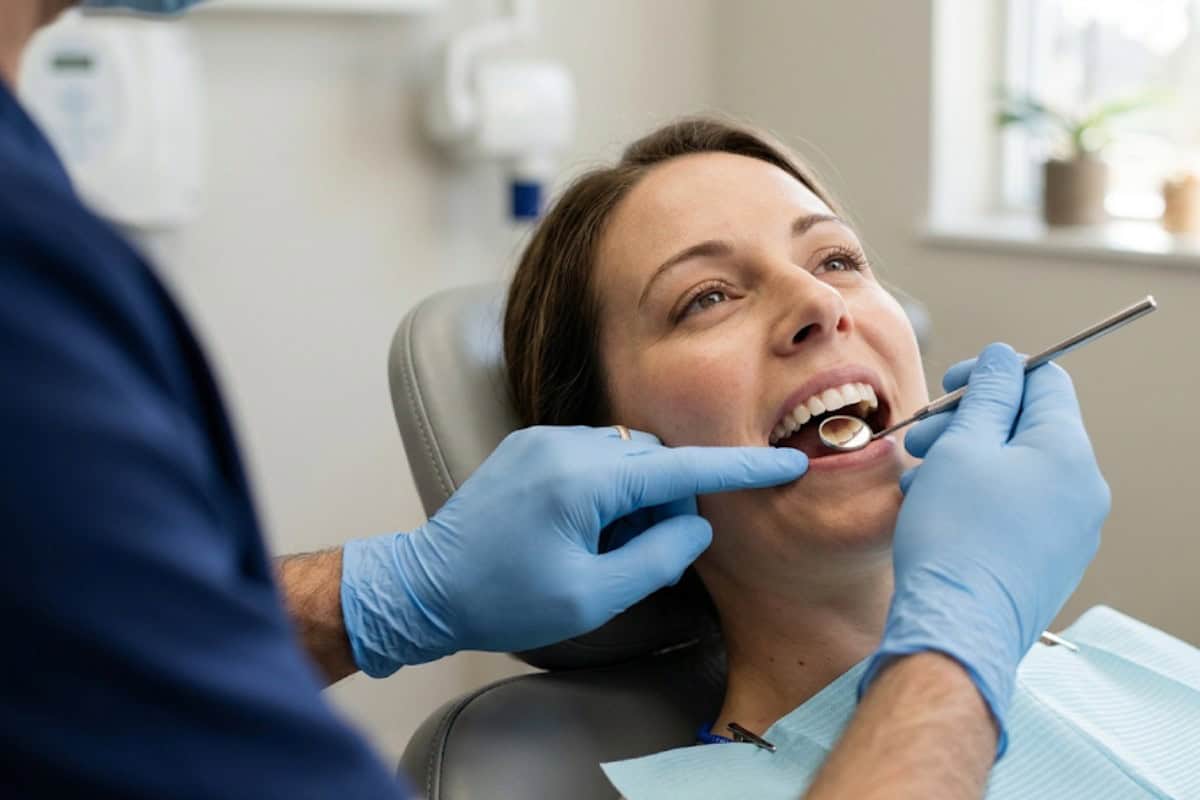
No. Before your dentist removes any tooth structure, they numb the tooth along with the neighboring teeth and the gum tissue around it, specifically so you do not feel the preparation work. What you notice instead is pressure, vibration, and the sound of the handpiece. Those sensations can feel strange if you have never had a crown before, but they are not pain.
Patients who have already had a filling often describe the crown prep visit as very similar, just a little longer. If you have been putting off treatment for a cracked or worn tooth because you assumed the appointment would be rough, that assumption is worth revisiting.
What Happens Step by Step
A traditional crown is usually done in two visits about one to two weeks apart. At the first visit, your dentist numbs the area, then reshapes the tooth so the crown has room to sit. Preparing the tooth means removing some of your natural enamel, which is why the dental crown procedure is done under anesthetic rather than without it.
Next comes an impression or digital scan, which goes to the lab that fabricates your permanent crown. Before you leave, a temporary crown is made and fitted so the prepared tooth is covered and protected while you wait.
At the second visit, the temporary comes off and the permanent crown is tried in, adjusted, and cemented. Material matters here too, and Magnolia offers crowns in all-ceramic, porcelain-fused-to-metal, metal, and resin. Whichever material you choose, the average crown lasts five to 15 years with good care, so it is worth asking which one suits the tooth being treated and the way you chew.
What You Feel During the Appointment Itself
The numbing step takes a few minutes to fully take effect, and you may feel brief pressure while it is given. After that, the prepared tooth and surrounding gums go quiet.
During tooth preparation you feel pressure and vibration as enamel is removed, not sharp pain. If anything does feel sharp, that is your signal to raise a hand. More anesthetic is easy to add, and no one expects you to tough it out.
When the numbness wears off a few hours later, mild soreness at the gumline is common for a few days. That soreness is from the tissue being worked around, not from the tooth itself, and it fades on its own.
What Is Normal in the Weeks After
Once the permanent crown is cemented, expect some degree of sensitivity for roughly two weeks, especially to hot and cold. If your tooth still has its nerve, that temperature sensitivity is particularly common, and it should ease as time passes.
While you are wearing the temporary, mild discomfort or sensitivity is typical rather than a warning sign. Temporaries are built for short-term use, normally 2 to 3 weeks. Normal post-crown discomfort should not last longer than about two weeks, so anything that stretches well past that window deserves a phone call. Here is the whole timeline in one place.
| Stage | What you typically feel | How long it lasts |
|---|---|---|
| During the numbing | Brief pressure, then the tooth, neighboring teeth, and gums go numb so you do not feel the preparation | A few minutes to take full effect |
| During tooth preparation | Pressure and vibration as enamel is removed, not sharp pain | The length of the prep visit, with mild gumline soreness for a few days after the numbness wears off |
| Wearing the temporary crown | Mild discomfort or sensitivity, which is typical and not a red flag | Normally 2 to 3 weeks |
| First 2 weeks after the permanent crown | Sensitivity to hot and cold, especially if the tooth still has its nerve | Roughly 2 weeks, easing over time |
| Beyond 2 weeks | Normal: little to nothing. Call the dentist for pain on biting, or sharp or throbbing pain | Should not persist, get it evaluated |
What Is Not Normal
Two patterns are worth acting on. The first is pain that shows up specifically when you bite down or chew on the crowned tooth. That usually means the crown sits a little too high, and adjusting the bite is a quick, painless fix.
The second is pain that lingers well past the two-week mark, or pain that is sharp and throbbing rather than a brief zing from cold. That can mean the crown is pressing on an irritated nerve, sometimes with infection developing underneath, and it needs prompt evaluation. If you are in Tulsa, Oklahoma and either pattern describes your week, schedule a visit rather than waiting it out.
Taking Care of a Temporary Crown
The temporary is the part of the process that causes the most avoidable trouble, because it is cemented lightly on purpose so it can come off easily at your second visit. A few habits protect it:
- Avoid hard and sticky foods such as hard candy, nuts, caramel, and apples, which can crack or lift the temporary.
- Keep brushing and flossing carefully around the area instead of skipping it.
- Chew on the opposite side when you can, especially for the first day or two.
- Call the office promptly if the temporary feels loose or comes off, and read up on what to do if a crown gets dislodged.
- Contact your dentist if pain from the temporary lasts longer than about a week or gets worse instead of better.
Following that temporary crown guidance means your second visit is a straightforward swap rather than an unplanned repair.
If You Are Anxious About the Appointment
Anxiety about dental work is far more common than most patients realize. Roughly 26 percent of patients report moderate to severe dental anxiety, and about 8 percent have missed an appointment because of it, according to research on sedation dentistry options from the Academy of General Dentistry. Nitrous oxide is the most widely used minimal sedation option, and about 70 percent of practices that offer sedation use it.
Minimal sedation is designed to provide relaxation and comfort during the visit, and in some cases patients have little memory of the procedure afterward. If nerves are the real reason a crown keeps getting postponed, say so when you book. It changes how the appointment is planned.
Why Choose Magnolia Family Dental Care
The sensation question is the one we get asked first, so here is how we handle it. Dr. Melissa Jackson numbs the tooth and the surrounding gums before any reshaping begins, and we check in with you during the prep rather than assuming silence means comfort. For patients whose anxiety runs deeper than a single appointment, sedation dentistry is available at our South Tulsa office. We walk through the two-visit process up front, including the temporary crown you will wear between appointments about one to two weeks apart, so nothing about the timeline is a surprise. We also review your material options, all-ceramic, porcelain-fused-to-metal, metal, and resin, so you know what your finished crown will look and feel like before we start. Digital X-rays are taken on site, Spanish is spoken here, and we see patients from across Tulsa, Oklahoma as well as Broken Arrow, Bixby, Jenks, Owasso, Sand Springs, and Catoosa.
Conclusion
Getting a crown should not hurt. The tooth and surrounding gums are numbed before any enamel is removed, so the prep visit registers as pressure and vibration rather than pain. Afterward, expect mild gumline soreness for a few days and temperature sensitivity for about two weeks, both of which fade. Pain when biting down, or discomfort that outlasts that two-week window, is worth a call rather than a wait. If you have a cracked, worn, or heavily filled tooth and you have been avoiding treatment because of what you assumed the appointment would feel like, reach out to our Tulsa, Oklahoma office and we will talk it through.
Ready to Get That Tooth Taken Care Of? Call Magnolia Family Dental Care to schedule your crown consultation in South Tulsa, or book online through our appointment page. We will walk you through every step before we begin.
Frequently Asked Questions About Dental Crown Pain
How long does a crown hurt after getting it?
Mild sensitivity, especially to hot and cold, is normal for about two weeks after a permanent crown is cemented. Soreness at the gumline usually settles within a few days. Discomfort that outlasts two weeks, or that worsens instead of improving, should be evaluated by a dentist.
Why does my crown hurt when I bite down?
Pain that appears specifically when you bite or chew usually means the crown sits slightly too high, so it hits the opposing tooth first. A dentist can adjust the bite in a short, painless visit. Left alone, a high crown keeps irritating the tooth underneath.
Is it normal for a temporary crown to hurt?
Mild discomfort or sensitivity while wearing a temporary crown is typical, not a sign of a problem. The prepared tooth is covered by a lighter, less precisely fitted restoration than the final crown. Call your dentist if the pain lasts longer than about a week or becomes more severe.
Can you get a crown without a root canal?
Yes. A crown is needed when a tooth is cracked, worn, or too damaged to hold a filling, while a root canal is only needed when the nerve inside the tooth is infected or badly inflamed. Many crowns go on teeth with healthy nerves, and those teeth are more likely to feel temperature sensitivity afterward.
How long does it take for a crown to feel normal?
Most people stop noticing a new crown within two weeks, as temperature sensitivity fades and the bite settles in. If it still feels high, sharp, or painful after two weeks, it likely needs an adjustment.
Sorry, the comment form is closed at this time.