
10 Aug What to Eat After a Crown: A South Tulsa Patient’s Guide to Recovery Meals
A patient walking out of a dental office on South 66th East Ave in Tulsa after a two-hour crown appointment usually has one practical question before the car even leaves the parking lot: what to eat after a crown without damaging the new restoration or biting down on a mouth that is still partly numb. The cement holding a new crown in place needs time to fully set, the gum tissue around it is often tender, and local anesthesia can leave the cheek, tongue, or lip numb for a few hours afterward. Knowing which foods are safe, and which ones can undo a good appointment, makes the difference between a smooth recovery and an unplanned trip back to the dentist.
What to Eat After a Crown in the First 24 to 48 Hours
The general rule dentists give patients is simple: stick to soft, easy-to-chew foods for 24 to 48 hours after the appointment, whether the crown is temporary or permanent. This window matters most for a few reasons. First, if a temporary crown was placed while a permanent one is being made in a dental lab, it is held on with a weaker, temporary cement that is not designed to withstand hard chewing or sticky pulling. Second, even a permanent crown that was cemented the same day needs the bonding material time to reach full strength, and the gum line around the tooth is usually still irritated from the shaping and fitting process. Third, many patients are still numb for one to two hours after leaving the chair, and chewing on a numb cheek or tongue is a common and painful mistake. According to Cleveland Clinic, numbness from local anesthesia typically lasts around two hours, though it can vary from patient to patient, so waiting until sensation fully returns before eating anything is the safest approach.
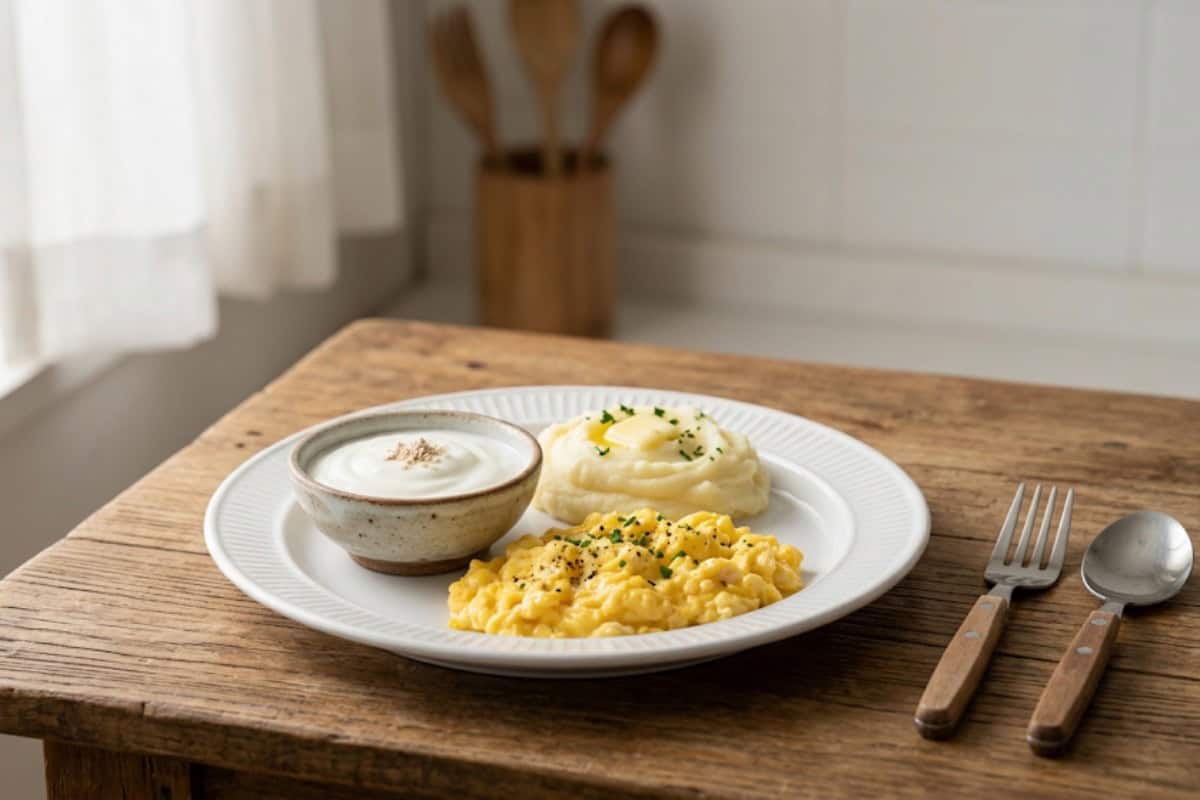
During this 24 to 48 hour window, the safest choices are foods that require little to no chewing on the affected side. Yogurt, mashed potatoes, scrambled eggs, warm soup, oatmeal, and smoothies are all easy on a new crown and gentle on tender gum tissue. Chewing, when necessary, should happen on the opposite side of the mouth from the new crown. Many patients also notice some temperature sensitivity in this window, since the tooth and gum tissue around a new crown are still settling. This kind of tooth sensitivity usually eases within a week or two, so lukewarm foods and drinks tend to be more comfortable than something straight from the freezer or fresh off the stove.
| Foods to Eat (First 24 to 48 Hours) | Foods to Avoid (First 24 to 48 Hours) |
|---|---|
| Yogurt | Sticky candy (caramel or taffy) |
| Mashed potatoes | Ice |
| Scrambled eggs | Raw carrots |
| Warm soup | Nuts |
| Oatmeal | Popcorn |
| Smoothies | Chewy steak |
Why Some Foods Are Riskier Than Others After a Crown
Sticky candy, including caramel or taffy, is one of the biggest risks to a new crown because it can physically pull at the cement seal, especially on a temporary crown, and in some cases dislodge the restoration entirely. Ice causes a different kind of problem. Chewing on ice puts sudden, concentrated force on tooth enamel and restorations, and chewing ice is a habit dentists specifically warn against because it can chip or crack a crown even when the tooth underneath feels fine. Raw carrots, nuts, and popcorn fall into the same category: they demand hard biting force or, in the case of popcorn, contain hard kernel fragments that can wedge under the crown margin or crack a cusp. Chewy steak and other tough meats require prolonged grinding pressure that a newly placed crown is not ready to handle.
There is also a longer-term reason to be thoughtful about diet around a new crown. The seam where a crown meets the natural tooth is a spot where bacteria and food particles can collect more easily than on a smooth, uninterrupted tooth surface. The National Institute of Dental and Craniofacial Research explains that tooth decay develops when bacteria feed on sugars left behind on the teeth and produce acids that wear down enamel over time, so frequent sugary or starchy snacking near a new crown margin adds unnecessary risk during the weeks it takes the gum tissue to fully settle.
Eating With a Temporary Crown Versus a Permanent Crown
Most dental crowns are not placed in a single visit. A crown itself is essentially a cap that fits over a tooth to restore its size, shape, and strength, as described in the ADA’s overview of how crowns work. After the tooth is shaped and an impression is taken, a temporary crown is worn for one to two weeks while the permanent crown is custom-made in a dental lab. That temporary crown is held on with a softer cement that is meant to come off easily at the follow-up visit, which also means it is far more vulnerable to sticky candy, hard nuts, or chewy steak during that window. Chewing directly on the temporary crown, especially with sticky or hard foods, is one of the most common reasons a temporary comes loose before the permanent crown is ready.
Once the permanent crown is cemented, the same soft-food caution applies for the first 24 to 48 hours, but after that, most patients can return to their normal diet as long as the crown feels comfortable and the bite feels even. If a crown ever does come loose, whether it is temporary or permanent, treating the tooth carefully and calling the dentist promptly matters more than trying to fix it at home. A previous post on this blog covers exactly what to do if you’re dealing with a loose crown between now and your next appointment.
Why Choose Magnolia Family Dental Care for Crown Aftercare
Patients who get a crown at Magnolia Family Dental Care in Tulsa leave the appointment with eating guidance that is specific to their own tooth, their own bite, and the type of crown they received, rather than a generic printed sheet handed out to everyone. A patient with a temporary crown on a back molar needs different advice than a patient who received a same-day permanent crown on a front tooth, and that distinction gets addressed at chairside before the patient ever leaves the building. That matters for the patients who drive in from Bixby or Jenks for an appointment and are already thinking about lunch on the way home, or for South Tulsa patients trying to plan dinner around a visit that same evening. Dr. Melissa Jackson and the team walk through what to expect for the next 24 to 48 hours, including which side of the mouth to favor and when normal eating can resume, as part of the crown appointment itself. Questions that come up after the visit, such as whether a particular food is safe or why a tooth feels sensitive to cold, can be directed straight to the office at (918) 492-3771 rather than left to guesswork.
Signs You Should Call Your Dentist After a Crown
Most crown recoveries go smoothly, but a few warning signs are worth paying attention to during the first couple of weeks. If any of the following happen, it is worth calling the dental office rather than waiting it out:
- The bite feels noticeably higher on the crowned tooth than on the surrounding teeth, even after a day or two.
- The crown feels loose, shifts, or comes off completely.
- Sharp pain lingers well beyond the expected sensitivity window instead of gradually improving.
- Gum tissue around the crown stays swollen, red, or tender after several days.
- A piece of the crown chips or cracks, even a small corner.
Any one of these is a reasonable reason to schedule a follow-up rather than adjust eating habits around the problem indefinitely.
Eating Well After a Crown: What to Remember
The single most useful habit after any crown appointment is simple: give it 24 to 48 hours of soft, gentle eating before testing anything hard, sticky, or chewy on that tooth. Most discomfort and sensitivity fade within one to two weeks on their own, but a bite that feels off, a crown that feels loose, or pain that keeps getting worse instead of better are all signs to call rather than wait. For patients anywhere around Tulsa, OK, planning meals around a crown appointment does not have to be complicated once the basic timeline is clear. If a meal ever feels uncertain or a crown does not feel quite right, reaching out directly is faster than guessing.
If a crown feels off, a temporary has come loose, or it’s simply time to get a damaged tooth restored, the team at Magnolia Family Dental Care can get you on the schedule. Book online or call to set up a visit.
Frequently Asked Questions
How long should I wait to eat after getting a crown?
Wait until numbness from the anesthesia fully wears off, usually one to two hours, before eating anything. After that, stick to soft foods for 24 to 48 hours while the crown and gum tissue settle. Eating too soon while still numb risks biting the cheek or tongue.
Can I chew on the side of my mouth with the new crown?
Avoid chewing directly on a new crown, temporary or permanent, for the first day or two. Favor the opposite side of the mouth while the cement fully sets. Once the bite feels normal, chewing there again is generally fine.
What foods should I avoid with a temporary crown?
Sticky and hard foods are the biggest risk, since temporary cement is weaker than permanent cement. Caramel, taffy, gum, and nuts commonly pull a temporary crown loose. Crunchy foods like raw carrots or ice can dislodge it too.
Is it normal for a crowned tooth to feel sensitive to hot or cold?
Mild temperature sensitivity is common in the days after a crown, especially if the tooth had a large filling or a root canal. It typically eases within one to two weeks as the tooth and gum tissue adjust. Sensitivity that worsens or lingers longer than that is worth having checked.
How long does numbness last after getting a crown?
Local anesthesia typically wears off within one to two hours, though the exact timing varies by patient and dose. Some people notice lingering tingling a bit longer, particularly in the lower jaw. Wait until feeling fully returns before eating or drinking anything hot.
Sorry, the comment form is closed at this time.