
25 Sep How Much Is a Root Canal? Cost by Tooth Type, Crown, and Insurance
A root canal on a front tooth commonly runs $776 to $1,911 nationally, while the same treatment on a molar runs $1,030 to $2,471. That gap is the first thing to understand when you are asking how much is a root canal, because the price is driven less by the dentist and more by which tooth is hurting. More than 15 million teeth are treated and saved this way every year in the United States, so the numbers below are well documented. Here is what the ranges look like, what the crown afterward adds, and what insurance typically picks up.
How Much Is a Root Canal? National Cost Ranges
The national average for a root canal without insurance is about $1,165 to $1,200. That single number hides a lot of variation, though, and most people end up somewhere inside a range rather than at the average.
By tooth type, the commonly cited national ranges without insurance are $776 to $1,911 for a front tooth, $757 to $1,798 for a premolar (also called a bicuspid), and $1,030 to $2,471 for a molar. With insurance applied, the out-of-pocket numbers drop considerably: a Forbes Health breakdown puts the insured range at $200 to $1,100 for a front tooth, $200 to $1,250 for a bicuspid, and $300 to $1,472 for a molar.
Location matters too. State averages run from roughly $981 in Alaska to $1,429 in Indiana, and large urban markets tend to sit above rural ones. Whether your dentist is in-network with your plan usually moves the number more than geography does.
One more factor: who does the work. An endodontist, the specialist who treats root canals all day, may charge roughly 50 percent more than a general dentist for the same tooth. Many general dentists in Tulsa, Oklahoma handle straightforward cases in their own office, which can keep the total lower.
Why Molars Cost More Than Front Teeth
Front teeth, the incisors and canines, usually have a single, fairly straight canal. They are easy to reach and quick to clean out, so the fee is at the low end. The American Association of Endodontists’ cost guide points to exactly this: fewer canals and easier access mean less chair time.
Molars are the opposite. They sit at the back of the mouth, they have multiple canals, and those canals are often curved or narrow. More canals means more time, more instruments, and more skill, and the fee reflects that.
Complexity inside the tooth also raises the price. A retreatment of a tooth that had a root canal years ago, or a tooth with a severe infection at the root tip, takes longer than a routine case. Extra diagnostics, such as additional X-rays, get added in as well.
The Crown That Usually Comes Afterward
The root canal fee is rarely the whole bill. A tooth that has had its pulp removed is more brittle, so it normally gets a crown to hold it together and protect it from fracture, especially on a back tooth that takes heavy chewing force.
Plan for that separately. According to GoodRx, the average cost of a crown is $800 to $2,500 without insurance, with the price shifting by material: metal, ceramic, zirconia, and porcelain-fused-to-metal all sit at different points in that range. Crowns are typically two visits about one to two weeks apart, with a temporary crown in between.
So the realistic question is not just the root canal fee. It is root canal plus crown, and on a molar that combination is where most of the sticker shock comes from. If you want a real number for your specific tooth, schedule an exam and ask for a written estimate before anything is scheduled.
Root Canal vs. Extraction and Implant
Pulling the tooth looks cheaper on the day, but it usually is not cheaper over time, because the gap still needs to be filled. A single dental implant runs approximately $4,000 to $10,500, which is several times the cost of saving the natural tooth. Healthline’s implant comparison also notes that a root canal with insurance coverage ranges from about $250 to slightly over $1,600, more if a crown is needed.
Here is how the numbers line up side by side, using the national ranges without insurance discussed above.
| Treatment | National range without insurance | Why the price lands there |
|---|---|---|
| Root canal, front tooth | $776 to $1,911 | Usually a single, fairly straight canal that is easy to reach |
| Root canal, premolar (bicuspid) | $757 to $1,798 | Fewer canals than a molar, further back than a front tooth |
| Root canal, molar | $1,030 to $2,471 | Multiple canals, often curved or narrow, and harder to access |
| Crown after the root canal | $800 to $2,500 | Varies by material: metal, ceramic, zirconia, porcelain-fused-to-metal |
| Extraction plus a single dental implant | About $4,000 to $10,500 | Replaces the tooth instead of treating it, so it costs several times more |
If a tooth truly cannot be saved, extraction followed by an implant, a bridge, or a removable partial denture is the path forward. But when the tooth can be saved, saving it is almost always the less expensive choice.
What Insurance Usually Covers
Root canals are generally treated as a covered basic or major service, since they are a predictable way to save a tooth. Coverage percentages vary widely by plan. GoodRx reports that dental plans are likely to cover 50 percent to 80 percent of the root canal cost once your deductible is met, while CareCredit puts typical coverage of endodontic procedures closer to 30 percent to 50 percent depending on the policy.
Crowns are often covered at a lower percentage than the root canal itself, which surprises people. Annual maximums matter too: if your plan caps benefits at a set dollar amount per year and you have already used part of it, the remainder comes out of pocket.
The practical move is to have the office run your benefits before treatment, not after. That tells you your deductible status, your remaining annual maximum, and what percentage applies to each code.
Ways to Pay for a Root Canal
Most people cover a root canal with some combination of the following:
- Dental insurance benefits, applied first, with the office filing the claim for you
- A payment card or debit card for the remaining balance
- CareCredit interest-free financing, subject to approval, to spread the cost out
- A discount membership plan if you do not carry dental insurance
- Timing treatment so the root canal and the crown fall in different benefit years when your dentist says waiting is safe
That last option only works when the infection is stable and your dentist agrees the delay carries no risk. If you are in real pain, treat it now. Over-the-counter measures can offer short-term relief, but they do not stop an infection inside the tooth.
Is a Root Canal Worth the Cost?
The success numbers are strong. Root canal treatment has a success rate of more than 90 percent, and one study found more than 94 percent of treated teeth were still functional three and a half years later.
Treatment itself is shorter than most people expect: one or two office visits, with local anesthesia, and little to no pain during the procedure. With good home care, a restored tooth can last a lifetime.
Weigh that against the alternative. Losing a molar changes how you chew, lets neighboring teeth drift, and starts a replacement process that costs several times more. For most people in Tulsa, Oklahoma, paying once to keep the natural tooth is the better math.
Why Choose Magnolia Family Dental Care
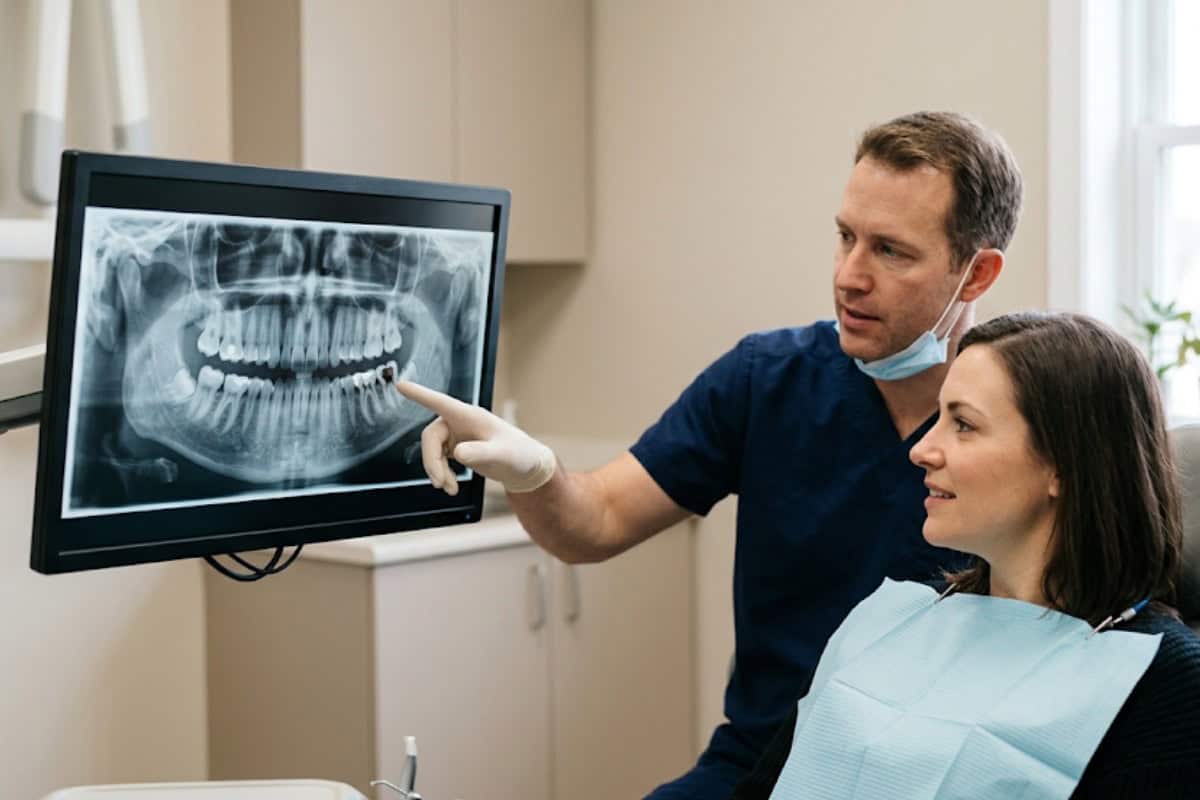
Cost questions usually turn into insurance questions, and that is where Magnolia Family Dental Care does a lot of the work for you. The office is in-network with several popular dental plans and files and tracks insurance claims electronically, so you are not chasing paperwork while your tooth hurts. Digital X-rays are taken on site, and written diagnostic reports are available when an insurer asks for documentation before approving treatment.
For the balance insurance does not cover, the office accepts cash, debit, and major credit cards, offers CareCredit interest-free financing subject to approval, and has a Magnolia Family Dental Premier Care Plan for patients without insurance. Root canals are handled in-house by Dr. Melissa Jackson, DDS, at the South Tulsa office on S 66th E Ave, and the process is described as similar to getting a filling. Patients come from across Tulsa, Oklahoma and from Broken Arrow, Bixby, Jenks, Owasso, Sand Springs, and Catoosa. Se Habla Español, and sedation dentistry is available if nerves are part of what is holding you back.
Conclusion
How much is a root canal comes down to which tooth, whether you need a crown, and what your plan covers. Nationally, expect roughly $776 to $1,911 for a front tooth, $757 to $1,798 for a premolar, and $1,030 to $2,471 for a molar, plus $800 to $2,500 for the crown, against about $4,000 to $10,500 for extraction and an implant. Insurance commonly absorbs a large share of that. The only way to know your number is to have the tooth looked at, so call the South Tulsa office or book online for a free consultation and an exact quote.
Get an Exact Quote for Your Tooth. Call or request a consultation online, and Magnolia Family Dental Care will examine the tooth and give you a free consultation with a clear estimate before anything is scheduled.
Frequently Asked Questions About Root Canal Cost
How much does a root canal cost with insurance?
With coverage applied, out-of-pocket costs commonly fall between about $200 and $1,472 depending on the tooth, and one source puts the insured range at roughly $250 to slightly over $1,600. Plans typically cover 30 percent to 80 percent after the deductible is met. Your annual maximum and in-network status both affect the final figure.
Why are root canals so expensive?
The fee covers X-rays, anesthesia, and the time needed to clean, shape, and seal every canal inside the tooth root. Teeth with multiple curved canals take longer and require more skill. Severe infections, retreatment, and specialist fees push the price higher still.
How much does a root canal and crown cost together?
The root canal itself averages about $1,165 to $1,200 nationally without insurance, and a crown adds roughly $800 to $2,500 depending on the material chosen. Combined, a molar case can approach or exceed $3,000 without coverage. Insurance often covers the two procedures at different percentages.
Is a root canal cheaper than a tooth extraction?
An extraction alone costs less on the day of treatment, but it leaves a gap that usually needs replacing. A single dental implant runs approximately $4,000 to $10,500, well above the cost of a root canal and crown. Saving the natural tooth is generally the less expensive long-term option.
How much is a root canal on a molar?
Molar root canals commonly range from $1,030 to $2,471 without insurance, the highest of any tooth type. Molars have multiple canals that are often narrow or curved, and they sit at the back of the mouth where access is harder. Both factors add chair time and cost.
Sorry, the comment form is closed at this time.